
FIELD TRIPS
FIELD TRIPS

We make learning engaging and exciting. Plan your next field trip today!
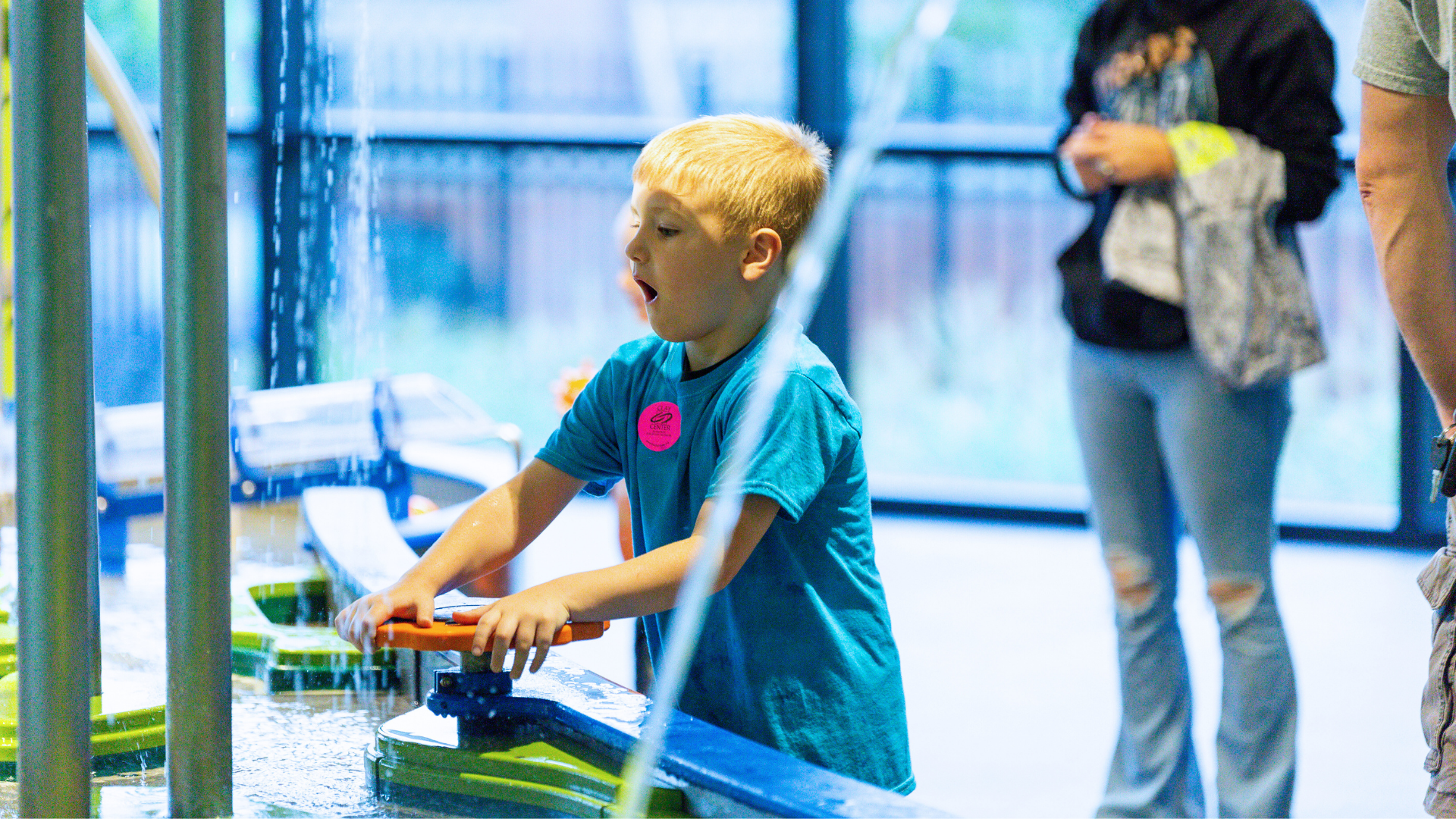
From the moment students set foot inside the Clay Center, we stretch their curiosity and challenge their expectations as they explore exhibits in the Avampato Discovery Museum, enter a portal to the cosmos in the Caperton Planetarium & Theater, and engage in hands-on experiences in the Juliet Art Museum.
-
1st–2nd Grade
Plan out your own city in this fun civil engineering workshop! Learn how to use a map legend, construct a simple building from Legos, and then “lay down” roadways for special Ozobot robots to drive on.
Academic Standards: S.1.11 | S.2.13
-
1st–2nd Grade
Get ready to react as we dive into the fascinating world of polymers! Students will explore the science of slime by first observing a premade sample, then creating their own and comparing the two. To expand the investigation, students will also experiment with a superabsorbent polymer and see how it reacts with water, uncovering the surprising ways polymers behave in our world.
Academic Standards: S.2.1
-
3rd–5th Grade
Become a paleontologist and uncover the clues hidden beneath the surface! Students will carefully excavate fossil pieces, make observations, and use evidence to develop a hypothesis about an unknown prehistoric creature. After reconstructing their creature as a 2D model, students will draw their discovery, give it a name, and consider what its features might tell us about how and where it lived.
Academic Standards: S.4.8 | S.4.11
-
3rd–5th Grade
Put your engineering skills to work as you design, build, and test a robot that can wiggle and create its own abstract artwork! Students will explore how circuits transfer electrical energy to a motor, then experiment with balance, marker placement, and other design choices to create a robot that moves on its own.
Academic Standards: S.4.2 | S.4.4 | S.4.14 | S.4.16
-
6th Grade+
Over five thousand exoplanets, or planets outside our solar system, have been discovered, but what kinds of worlds are they? How do we find out if they have the ingredients needed for life? Explore how scientists use light to discover what elements make up a planet’s atmosphere.
Academic Standards: S.6.10 | S.ESS.2
STEM Lab Content
Science Alive Demonsrations
-
3rd–5th Grade
Hang onto your hat as we see and feel the strength behind different types of forces! Gravity might pull us down, but we can find a way to reverse those effects!
Academic Standards: S.3.1 | S.3.2 | S.3.5
Art Exploration & Lab Content
-
1st–2nd Grade
Students will explore texture and creativity by making their own imaginative creatures! Using a variety of texture plates, they’ll create three different textured sheets of paper. These sheets will then be cut out and assembled to form a new creature, whether a fantastical monster or a natural animal. Along the way, students will experiment with pattern, texture, and composition while combining parts to make a one-of-a-kind creation.
Academic Standards: VA.K-2.1 | VA.K-2.3 | VA.K-2.4
-
3rd–5th Grade
Imagine you've traveled somewhere you've always wanted to visit. What would you send home to show someone what you discovered? Students will design a fictional or real environment on a foam relief plate, using lines, shapes, and textures to communicate a sense of place without words. They'll ink and print their designs, experiment with adding new details to their plates, and create a series of unique “postcards” from somewhere else.Academic Standards: VA.3-5.1 | VA.3-5.2 | VA.3-5.3 | VA.3-5.4 | VA.3-5.6
-
3rd–5th Grade
What happens when you take three different artworks and mix them together? Inspired by Barrie Kaufman's retrospective exhibition, students will look closely at the exhibition for interesting shapes, textures, patterns, and ideas. They'll choose elements from three different artworks and remix them into a brand-new creation. Along the way, students will discover how artists can experiment with ideas, materials, and inspiration to create something entirely on their own.
Academic Standards: VA.3-5.4 | VA.3-5.5 | VA.3-5.6 | VA.3-5.7 | VA.3-5.9
Early Childhood Content
-
Can you spot an animal that doesn’t want to be seen? Together we’ll read Look Again: Secrets of Animal Camouflage by Steve Jenkins and discover the clever ways animals blend into their surroundings. Afterwards, students will create their own camouflaged animal and see if the teacher can find where they’ve hidden it in the room!
Academic Standards: S.K.3
-
What happens if we are able to look closely at the natural world? In this engaging storytime, students will explore the book Unseen Worlds by Hélène Rajcak and Damien Laverdunt. Afterward, we’ll explore using digital microscopes and create fun artwork based on these microscopic observations!
Academic Standards: S.K.3
-
Discover the world of color mixing in this interactive storytime. Listen to the story Mouse Paint by Ellen Stoll Walsh and then explore mixing colors just like those sneaky three mice did. Students will use Model Magic clay to explore primary colors in a fun and tactile way.
Academic Standards: VA.K-2.1 | VA.K-2.2 | VA.K-2.3
Shows and Films
Films
Experience wonder through our large-screen films.
-
Our solar system is filled with amazing worlds that are both familiar and strange. Take a guided journey from the Sun to the eight planets and beyond, exploring icy moons, giant storms, dwarf planets, and other surprising objects along the way. Discover how each of these objects comes together to form our cosmic neighborhood!
-
This high-speed adventure for family audiences takes you on a roller coaster ride from the Moon through our solar system, galaxy and beyond. You’ll be immersed in some of the most amazing sites in the universe. It’s a ride you will want to take again and again. Narrated by Nancy Cartwright of TV’s The Simpsons. E&S Digital Theater.
-
Shark heroes and conservationists Jess Cramp, Liv Rose and Cristina Zenato lead this epic family adventure into the kingdom of sharks, where we’ll come face to face with these ancient and awe-inspiring animals and learn how our future is intertwined with theirs.
Each shark species wields unique powers that help them survive in diverse ecosystems, whether it’s a great white hunting in the wild and wind-swept seas of New Zealand, whaler sharks learning to coexist with Australian fishermen, or elusive oceanic white tip “shipwreck sharks” traversing uncharted depths of the Pacific.
In some of the world’s most beautiful diving locations, join the action to understand and help these magnificent creatures, and be immersed in the larger story of our shared oceans. -
MAGNETISM explains how Earth’s magnetic field acts like a shield — protecting us from harmful particles from the Sun and outer space. It also helps keep Earth’s water from being blown away by the solar wind.
The show features the first aurora ever seen at the same time from the ground and from the International Space Station. It also highlights NASA’s MMS mission, which studies how Earth connects to the Sun through magnetic energy.
MAGNETISM was created in partnership with the Houston Museum of Natural Science, Rice University, and Evans & Sutherland.
Live Shows
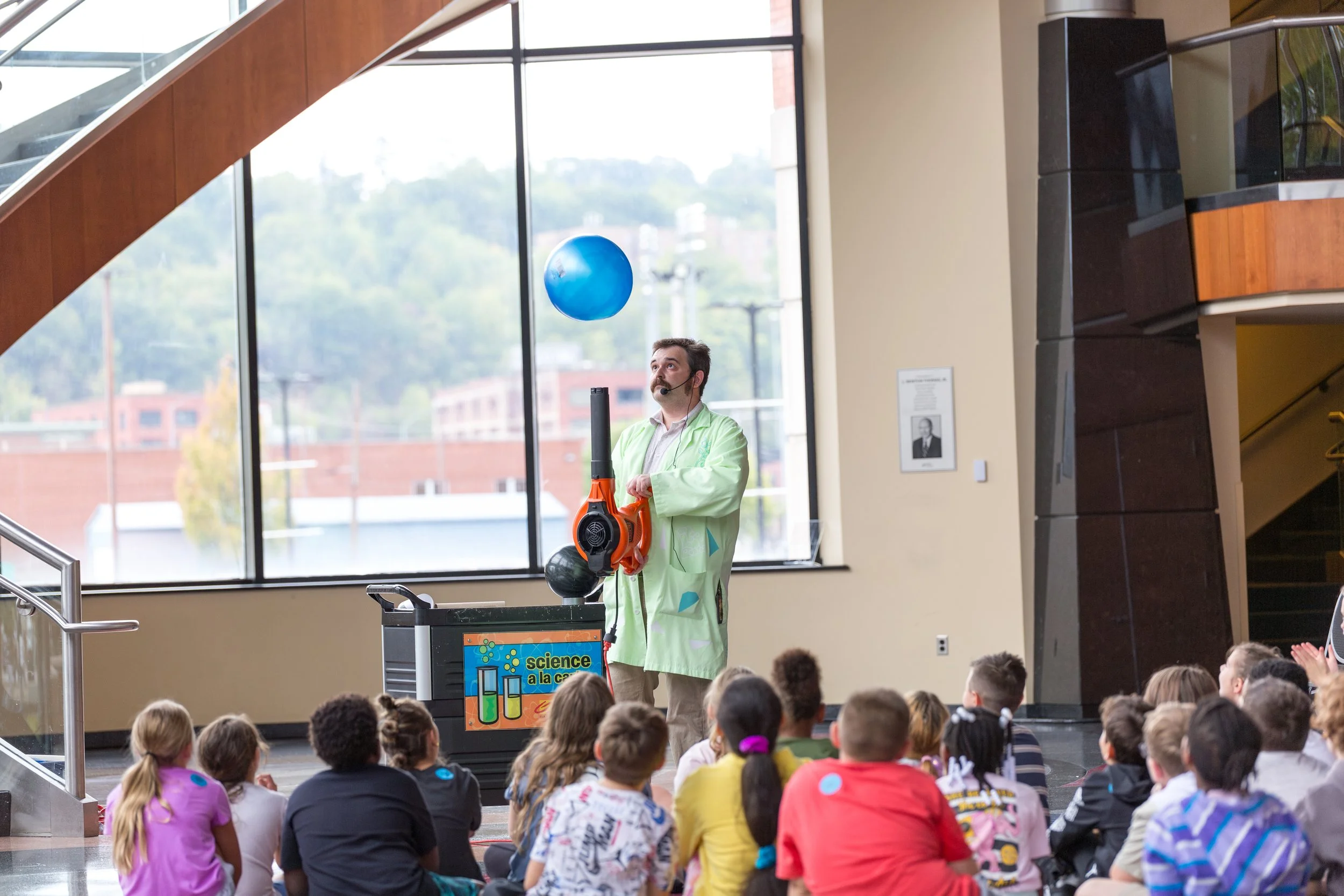
Live shows are led by a Clay Center Educator.
All live shows can be adapted to engage students in 6th grade and above.
-
Guided by a planetarium educator, What's Up in the Universe? is your chance to explore the night sky, ask questions, and discover what’s happening in space!
Each show is a little different. From moon phases to meteor showers, solar eclipses to solar systems, your curiosity helps guide the experience. If it’s up there, we’re talking about it!
Whether you’re a stargazing newbie or a lifelong space enthusiast, this show brings the universe a little closer - one question at a time.
-
A potentially habitable planet has been discovered, but before we can send explorers, we need to determine whether it has the ingredients necessary to support human life. Students become space scientists, using light and diffraction glasses to investigate the planet's atmosphere and gather evidence about the presence of elements such as oxygen, nitrogen, and argon before making the ultimate decision: Is this world enough like Earth to live there?
Field Trip Pricing
1 chaperone for every 10 students is required for field trips. Cost for additional adults is shown below.
Museum Admission
Students | $6.50
Chaperones | FREE
Additional Adults | $9.00
Museum Admission with Education Program
Students | $10.00
Chaperones | FREE
Additional Adults | $9.00*
*Not permitted in Workshop/Lab due to limited space
Museum Admission with Planetarium Film or Show
Students | $10.00
Chaperones | $3.50
Additional Adults | $12.50
Memberships cannot be used to cover field trip costs.
If you have questions or concerns regarding this, please contact us at 304-561-3570 or note them on the Field Trip Interest Form (click Book Your Field Trip above).
Museum Admission with Planetarium AND Education Program
Students | $13.50
Chaperones | $3.50
Additional Adults | $12.50*
*Not permitted in Workshop/Lab due to limited space